Last updated November 21, 2026
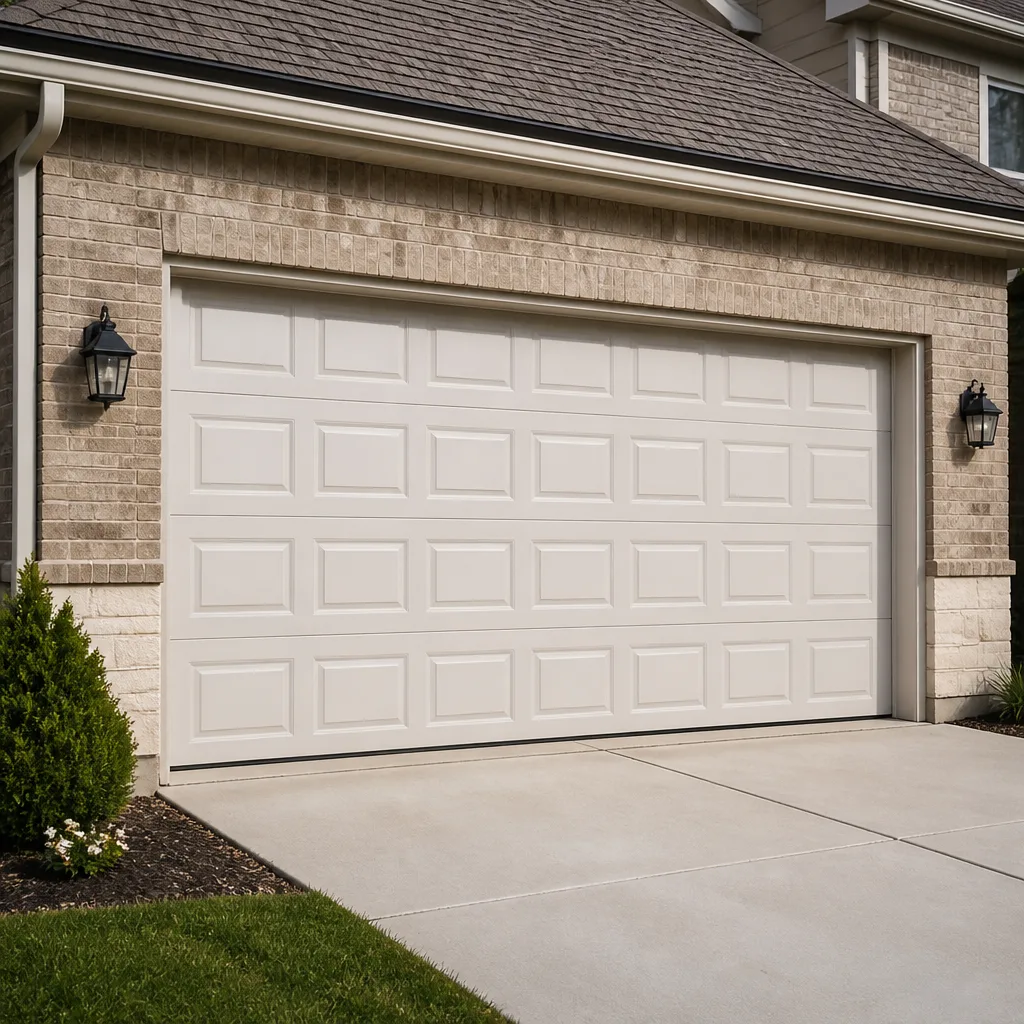 Raised-panel steel
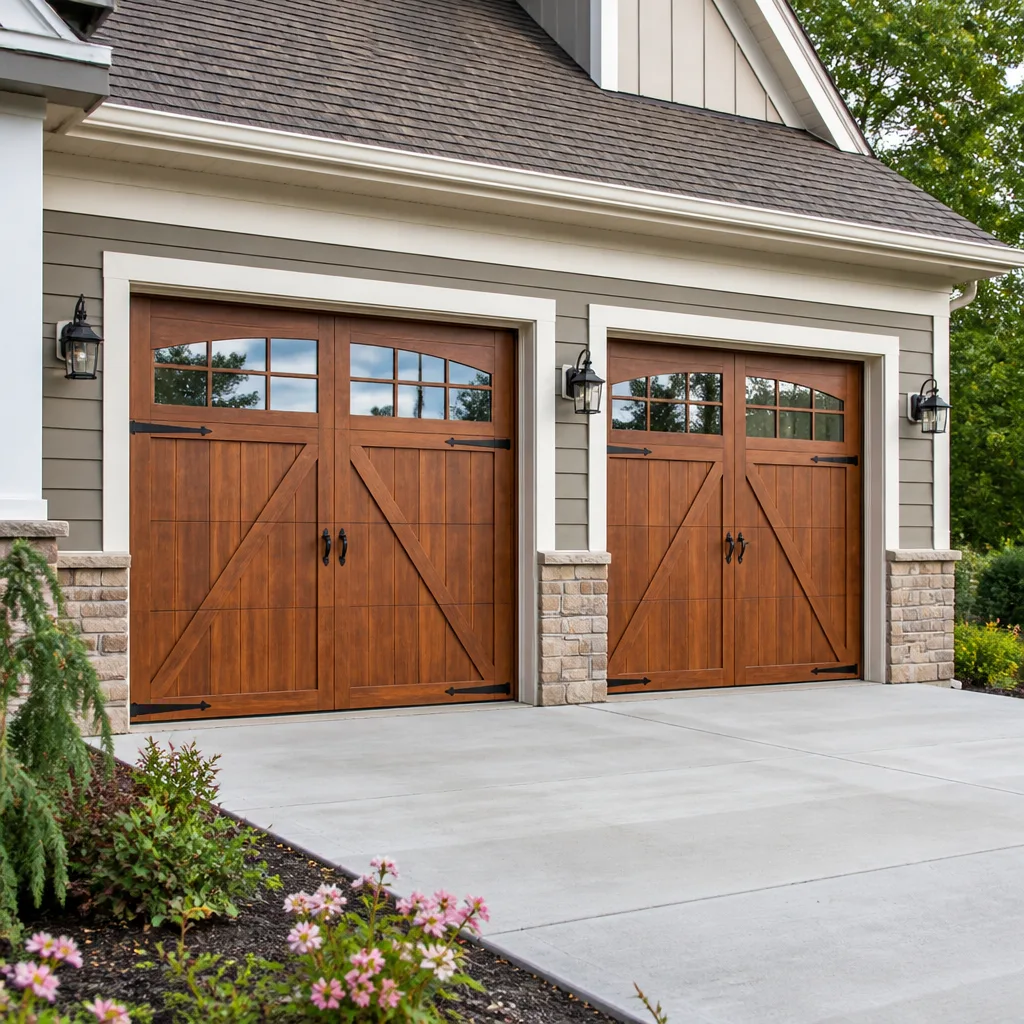 Carriage house
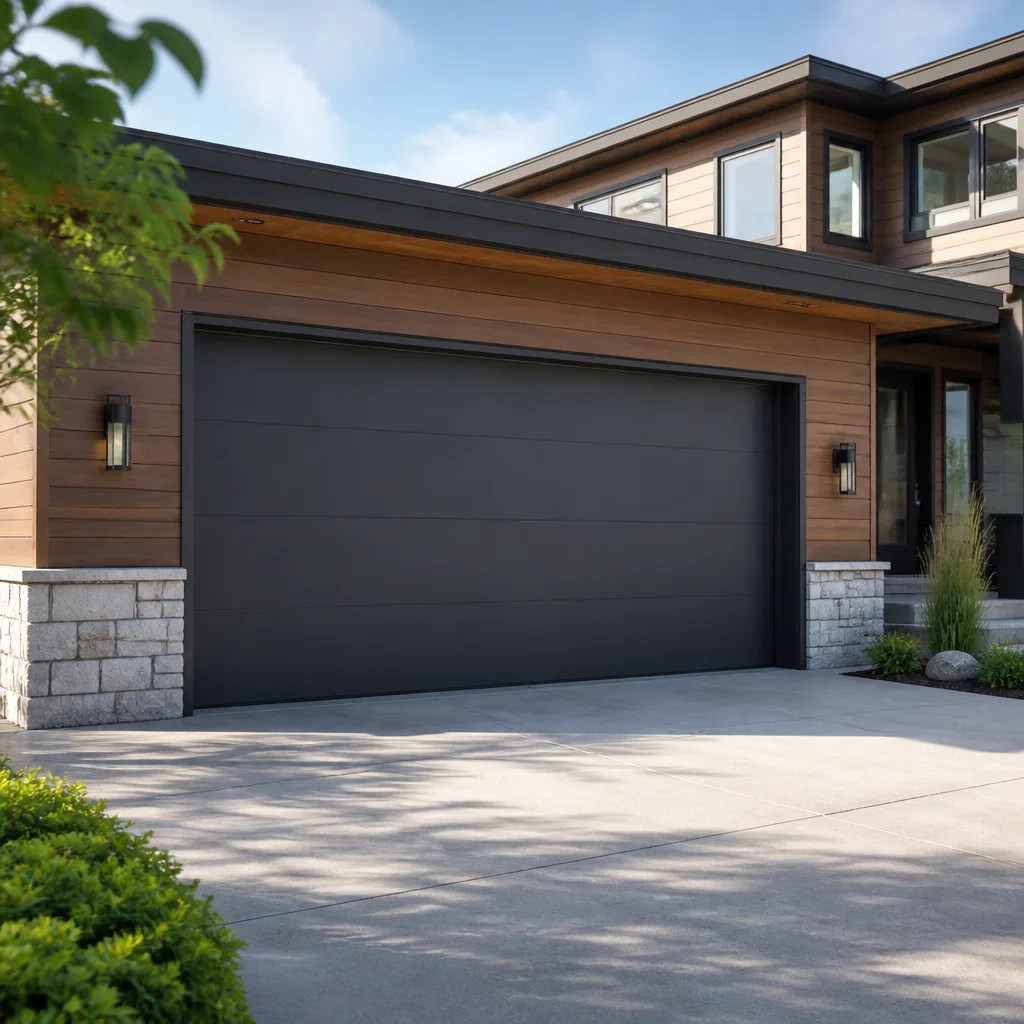 Modern flush
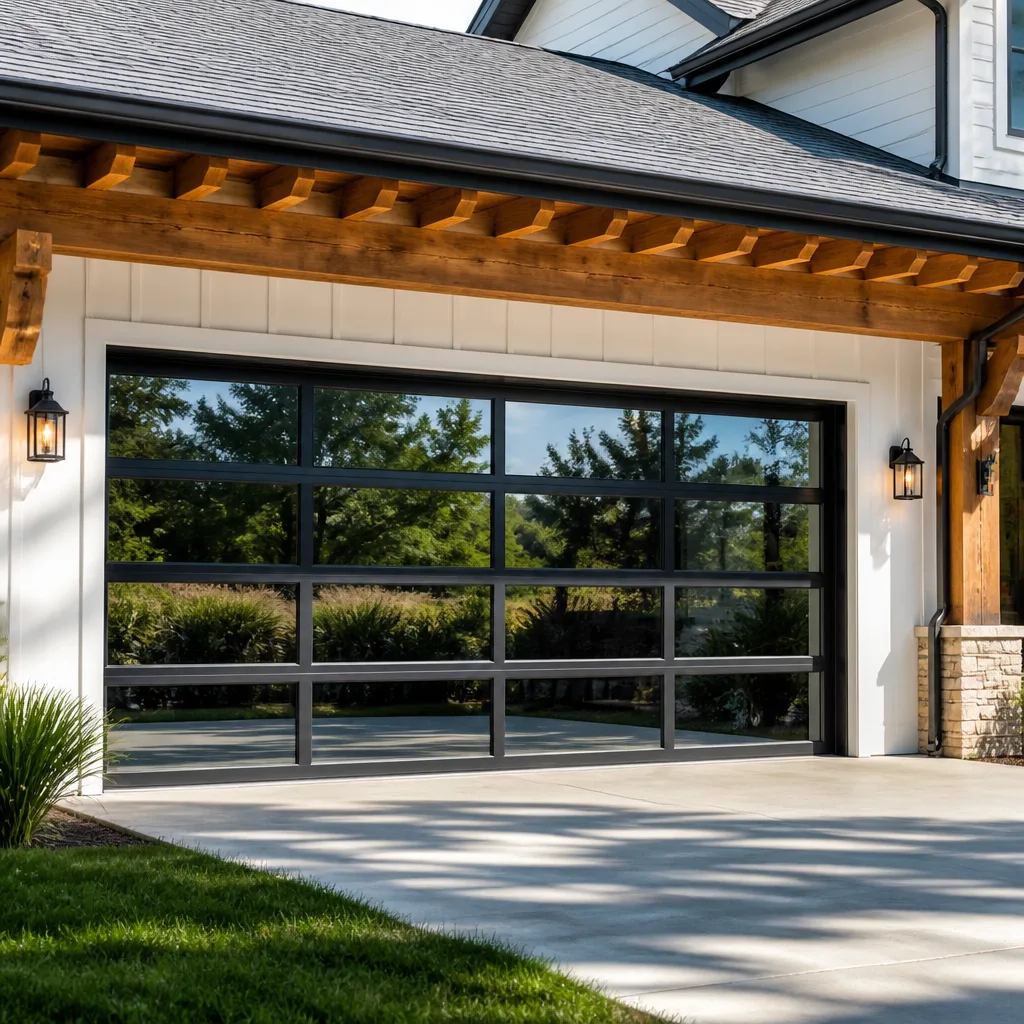 Full-view glass
 LiftMaster openers
 Chamberlain openers
Full 25-point door and opener safety check with every visit - springs, cables, rollers, tracks, and your LiftMaster or Chamberlain opener included
You get a price before we start. It does not change when the pro arrives.
Get your free estimateGarage Door Warning Signs: A Wakefield Homeowner’s Reference Guide
Most homeowners judge their garage door by how it looks. That’s the wrong sense entirely. A door doesn’t usually fail by sagging or cracking in front of you. It fails by getting slower, by groaning at a certain point in its travel, by a cable that wraps a little crooked. A door that opens in 14 seconds instead of 12 is telling you something. Most people won’t notice until it stops at 11 PM on a Sunday and the car is trapped inside. This guide is about listening and timing, not just looking. We’ll walk through what each sound means, how to read speed and balance, which visual clues are urgent, and how minor symptoms stack into a real failure risk. Wakefield homes deal with freeze-thaw cycles all winter, which puts extra stress on every moving part, so these signals matter here.
Quick Answer
A garage door in Wakefield shows three kinds of warning signs: sounds (grinding, popping, squealing, rattling), movement changes (slowing down, jamming, going out of balance), and visual clues (frayed or miswrapped cables, worn rollers, bent tracks, sagging panels). Noises and uneven speed usually point to worn springs, rollers, or bearings that need service within weeks. A door that reverses, hangs crooked, or has a visibly damaged cable or spring should stop being used until a technician inspects it. Two or more symptoms at once means the door is much closer to failure than the count suggests.
Styles & brands we work with
- Raised-panel steel
- Carriage house
- Modern flush
- Full-view glass
- LiftMaster openers
- Chamberlain openers
Table of Contents
- The Auditory Diagnostic: What Each Sound Means
- Movement Diagnostics: Speed and Balance Tests
- Visual Signs Homeowners Misread
- Signs That Allow Normal Use vs. Signs That Mean Stop
- Why Warning Signs Compound
- Wakefield Climate and What It Does to Garage Doors
- A Seasonal Inspection Routine for Wakefield Homes
- Repair or Replace? Reading the Signals Together
The Auditory Diagnostic: What Each Sound Means
Sound is the earliest and most specific warning your door gives you. The tricky part is that a door always makes some noise, so you need to know which sounds are normal and which name a failing part. Here’s how we break it down at the component level.
Grinding
Grinding is metal dragging on metal. In most cases it comes from worn or dry rollers skidding in the track, or from a torsion tube that has lost lubrication and is biting into its bearings. Left alone, grinding accelerates wear on the track itself, which turns a small repair into a bigger one. If the grind gets louder under load – halfway through opening, or on the way down – your rollers are often the culprit.
Popping
A single sharp pop, especially when the door is near the top of its travel, often points to a torsion spring that has unwound slightly or a drum that has slipped. Repeated popping on every cycle can mean a roller has jumped its track or the opener’s chain has worn slack. Popping is one of the sounds that should move a repair onto your calendar within days, not weeks.
Squealing
Squealing is friction and usually the least urgent of the four. Worn rollers, dry hinges, or a torsion bearing that has lost grease are the common causes. Squealing is annoying but rarely a safety problem on its own – treat it as a signal to schedule maintenance before it becomes grinding.
Rattling
Rattling is loose hardware: hinge bolts that have backed off, a track that’s come loose from its brackets, or a panel section that’s worked slightly out of alignment. It’s often the cheapest repair on the list, but it’s also the warning most often ignored until it grows into track misalignment.
What to listen for in order of urgency
- Popping on every cycle – the highest priority; schedule service within days.
- Grinding or a scraping sound – schedule service within a week or two.
- Rattling that’s getting louder – tighten and inspect soon.
- Mild squealing – maintenance-level, not an emergency.
Our technicians are familiar with the mechanisms used in Clopay and Amarr doors, which helps us match the specific culprit sound to the specific part faster than a generalist who has to guess.
Movement Diagnostics: Speed and Balance Tests
A door’s speed and balance tell you about spring health before the spring actually breaks. This is the diagnostic most homeowners skip, and it’s the one we lean on most.
The speed test
Time your door on a full open cycle. Use the same method each time: watch the second hand on your phone, or use a stopwatch, and start when the door breaks off the ground. Normal residential doors open in a consistent time – roughly 12 to 15 seconds is common for a standard single door. What matters more than the exact number is the change. If the door used to open in 12 seconds and now takes 14, the spring has weakened. A door that has slowed by two or three seconds is often three to six months away from a snap, and it’s the right moment to schedule a spring repair rather than wait for the break. Cycling the door slower than usual is a warning sign; a door that’s getting faster and feels jumpy is its own warning, often pointing to a spring that has lost tension unevenly.
The balance test
Disconnect the opener (pull the release cord) with the door in the closed position, then lift the door by hand about halfway and let go. A properly balanced door should hold roughly where you leave it. A door that sinks on its own has weakening springs. A door that springs back up too quickly or feels too easy to lift has a spring that is over-tensioned or has lost a cable, which is a stop-using-it situation. Do this test with the door stopped, never while it’s moving, and never reach your hand between the door and the track.
What changed speed and balance mean together
- Slower opening plus sinking in the balance test – springs are wearing out. Book a spring repair before failure.
- Uneven speed plus a crooked door – likely a cable or one spring in a pair failing. Stop using it.
- Fast, jumpy door plus an easy balance test – spring tension is wrong. Have it checked before continuing.
In Wakefield, the freeze-thaw cycle through winter can make a marginally worn spring feel noticeably worse in a single cold snap. That’s the reason we recommend testing in late fall, before the first hard freeze.
Visual Signs Homeowners Misread
Visual signs get noticed. They get interpreted wrong. Here are the ones we see misread most often, and what they actually mean.
A small gap in the cable wrap is a same-week repair
Cables are under constant tension. When you see a cable that has started to wrap unevenly on its drum, or a single strand poking out, most homeowners see a “small” problem and move on. That’s the mistake. A cable with a gap or fray is already partway to failure, and cables fail without warning once they start. It’s a same-week repair, not a next-month repair. A door with a visibly damaged cable should not be operated until a technician looks at it.
Sagging panels
A single panel that has gone slightly out of line is easy to ignore. It also often means a hinge has backed out or a roller has jumped, and every cycle pushes the door further out of true. Left alone, a minor misalignment turns into a track replacement. Panels on Wayne Dalton and Craftsman doors can sometimes be corrected without replacement, but only before the door has been worked out of alignment repeatedly.
Worn rollers
Rollers should roll. When they stop rolling and start dragging, you get the grind. Look at each roller: a good roller is round and spins freely. A worn one is flat-spotted or doesn’t turn. Worn rollers are a low-cost fix that prevents a much bigger one.
Rust and corrosion on the track
A track with visible rust or flaking paint in Wakefield homes is often a sign the door has been exposed to moisture – either from a snow-melt pattern along the driveway, or from a door that’s been left slightly open in rain. Rusty tracks bind the rollers, and binding is what produces grinding and misalignment.
The photo-eye and safety reverse
Every opener has a safety system – either a photo-eye or a pressure sensor – that should reverse the door when something is detected in the path. Test it monthly: put a piece of wood or a rolled-up newspaper in the door’s path and cycle the door. If it doesn’t reverse on contact, that’s an urgent repair, not a minor one. A door that fails its own safety test should not be used.
Signs That Allow Normal Use vs. Signs That Mean Stop
Not every warning sign means stop. Knowing the difference keeps you from calling for a repair that could safely wait, and stops you from using a door that shouldn’t move.
Signs that allow normal use while you schedule service
- Squealing or light rattling without other symptoms.
- A clean visual check with a slightly slow door and consistent motion.
- Worn rollers that still roll but have flat spots.
- A door that runs smoothly but is noisier than it used to be.
In these cases, schedule an inspection within a few weeks. Don’t let it drift into months.
Signs that mean stop using the door now
- A visibly frayed, tangled, or drum-slipped cable.
- A torsion spring that’s visibly broken (usually a gap in the coil) or a door that has dropped suddenly.
- A door that hangs crooked or reverses on its own mid-cycle.
- Grinding that has gone deep, or a track that has bent visibly away from the door.
- Any failure of the safety reverse test.
If you see any of these, leave the door in the closed position and call for emergency service. Torsion springs and cables are under extreme tension, and they can injure anyone who tries to work around them, so don’t attempt to fix or adjust them yourself. We handle garage door repair as a standing service, and our spring repair work covers the highest-risk part of the system.
Why Warning Signs Compound
Two minor symptoms are not twice as bad as one. They’re often much worse than that, and here’s why.
Each part of a garage door system depends on the ones around it. A worn roller doesn’t just drag; it pushes sideways on the track, which loosens a bracket, which pulls the door slightly out of alignment, which changes the load on the spring, which wears the spring faster. Once two parts are out of spec, the rate of wear on everything downstream goes up. In our experience, a door with two visible symptoms is often within a few weeks of a hard failure, while a door with one symptom often has months of safe use left. That’s the compounding effect.
How to read a door with more than one symptom
- Count the symptoms. One symptom, one part. Two symptoms, likely two connected parts. Three symptoms, the door may already be in a hard-failure window.
- Look for a connecting part. If a roller and a hinge are both worn, the roller is probably the driver. If a roller and a spring are both failing, the spring is more likely the driver.
- Check urgency signs first. Any stop-using sign overrides the count.
- Don’t wait to see if symptoms “settle.” They don’t. A worn system wears faster, not slower.
When we’re called to diagnose a door in Wakefield with more than one symptom, the visit almost always turns into a slightly larger repair than the customer expected, because the second symptom has already started to spread. The earlier call usually turns into a smaller repair.
Wakefield Climate and What It Does to Garage Doors
Wakefield’s winters put real stress on every moving part. Freeze-thaw cycling expands and contracts metal, drives moisture into track brackets and rollers, and stresses springs through the widest range of temperature they see in the year. A door that felt fine in September can start groaning by November, and a marginally worn spring can snap on the first cold morning of the season.
Here’s what we look at differently in Wakefield homes compared to a milder climate:
- Springs – the tension gets harder to read as temperatures fall. A door that passes a balance test in fall might fail it in deep winter. Time the door in October and again in January, and compare.
- Tracks and rollers – snowmelt along the driveway finds its way into track brackets and rollers. Look for rust or flaking along the track, especially at the bottom bracket.
- Wood framed doors – panels that are framed in wood can swell slightly in damp weather and dry out in the summer, which shifts panel alignment. Look for panels that move out of true seasonally.
- Safety reverse – snow and ice can build up under the door’s path and set off the safety reverse unexpectedly. That’s usually a path problem, not a sensor problem, but it’s worth checking the path is clear before calling.
If you’re not sure whether what you’re seeing is climate-driven or a real mechanical failure, that’s the call to make. Wakefield Garage Door Repair Pros offers free estimates in Wakefield, and we’d rather look at a door before it fails than pick up the pieces after.
A Seasonal Inspection Routine for Wakefield Homes
A 15-minute inspection in fall and spring catches most warning signs before they compound. Here’s the routine we recommend to every homeowner we work with in Wakefield.
- Time the door. Use a stopwatch and start when the door breaks off the ground. Note the time and compare to your last check. A change of two seconds or more is worth a call.
- Listen on one full cycle. Open the door and close it, and pay attention to whether each phase (start, middle, end) sounds different.
- Run the balance test. Pull the opener release, lift the door halfway, let go, and note whether it holds.
- Test the safety reverse. Put an object in the path and cycle the door. It should reverse. If it doesn’t, call for repair before using the door again.
- Check each roller. Rollers should spin freely and look round. Flat spots or locked rollers are a maintenance item.
- Look at the cables. Check the cable wrap on each drum. Any fray, gap, or uneven wrap is a same-week repair.
- Tighten the obvious hardware. Hinges, bracket bolts, and the opener chain are the common loose points. Snug them, don’t over-tighten.
If you’ve done all seven steps and the door is behaving, you’re in good shape. If two or more steps turn up a problem, that’s the compounding warning we talked about above, and it’s the right moment to call us. Our technicians have up to 11 years of experience, and we work on the most common opener and door brands including Clopay, Amarr, Wayne Dalton, and Craftsman, so we can usually tell you the culprit on the first visit.
Repair or Replace? Reading the Signals Together
Most warning signs point to a repair, not a replacement. But a door that shows enough compounded symptoms can be at the point where a repair costs more than it saves. Here’s how we read the signals together.
Signs that point to repair
- Single symptom, recent onset, or a part that’s clearly worn.
- A door under a certain age with no panel damage.
- A door that still passes the safety reverse test and balance test.
Signs that point toward replacement
- Two or more panels that have failed or gone out of true, especially on a door that’s been realigned more than once.
- A track that’s bent in more than one place, or has pulled loose from its brackets repeatedly.
- A door whose springs, cables, rollers, and track are all showing wear at the same time.
- A door whose opener is failing and whose hardware is past service life.
What we won’t do is talk you into a replacement because the springs are worn. Spring wear is a repair. Panel and track damage is where the decision starts. If you’re on the fence, we can lay the two paths out side by side and give you the numbers, and the decision stays with you. You can read more about how we handle garage door opener repair if the opener is the part you’re worried about, and how garage door installation works when the door has reached the end of its service life.
Common Mistakes to Avoid
- Waiting to see if a symptom “settles.” Mechanical parts don’t heal. A worn roller or spring will keep wearing, and the second symptom usually costs more than the first. If you notice something off, put it on the calendar.
- Pushing a door with a visibly broken spring or cable. If you can see the coil gap in the spring or a fray in the cable, don’t cycle the door. Torsion springs and cables are under extreme tension and can release without warning; call for emergency service instead.
- Testing the balance of a door with a visible failure. The balance test is safe on a healthy door; it’s not the test to run on a door that’s already misaligned or has a damaged cable.
- Assuming a quiet door is a healthy door. A door that has stopped squealing isn’t necessarily fixed; sometimes the squeal stops because a roller has locked up completely and is now dragging without noise. Check the rollers, don’t just listen.
- Replacing the opener to fix a door problem. A door that’s slow, jerky or hesitant isn’t usually an opener problem; it’s a spring, roller, or balance problem. Replacing the opener first is the most common mistake we see in Wakefield homes. Get the door diagnosed first.
- Ignoring the safety reverse test. It’s the only test that tells you whether your door will stop on a person or a pet. Test it monthly. If it fails, call for repair and leave the door closed until it’s fixed.
- Over-tightening hardware to quiet a rattle. Over-tightening brackets and hinge bolts can warp the track and cause worse misalignment. Snug is the goal, not tight. If the rattle keeps coming back, something else is driving it.
See the difference
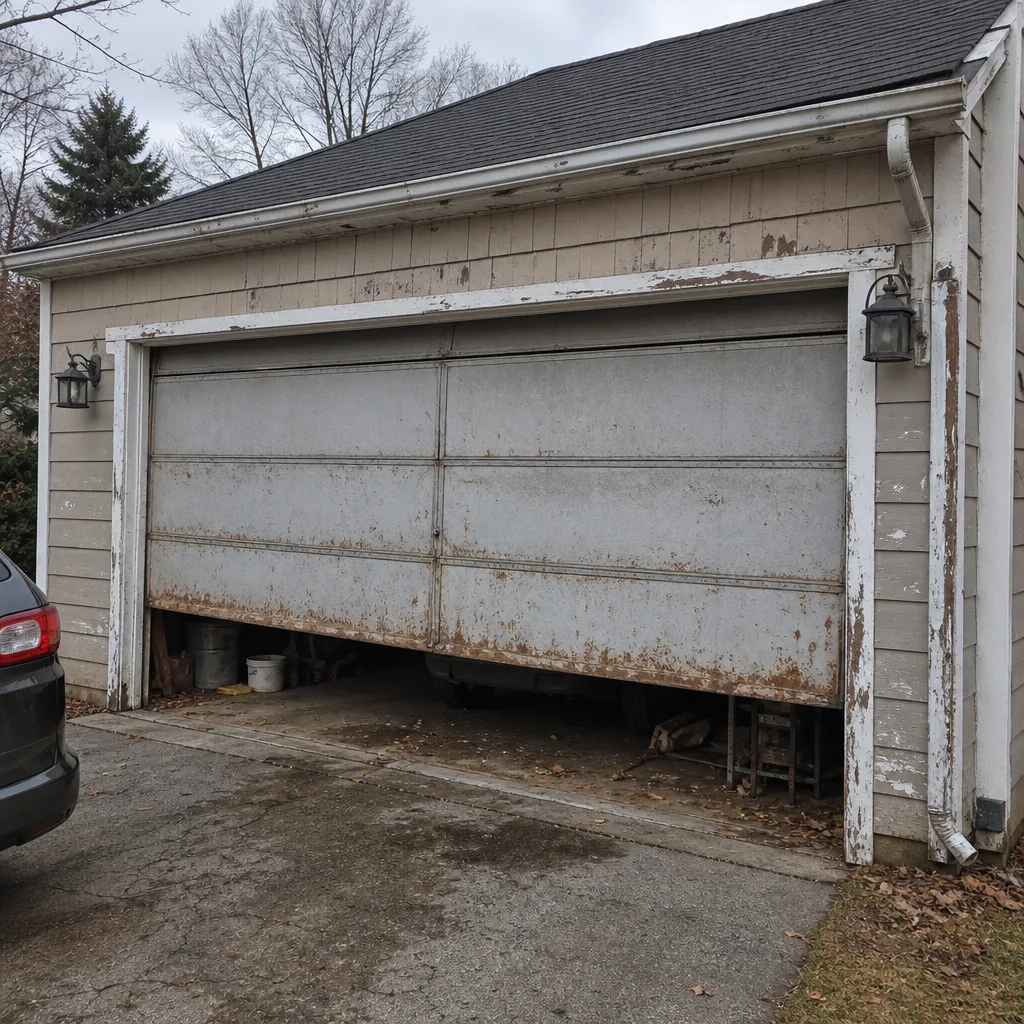 Before
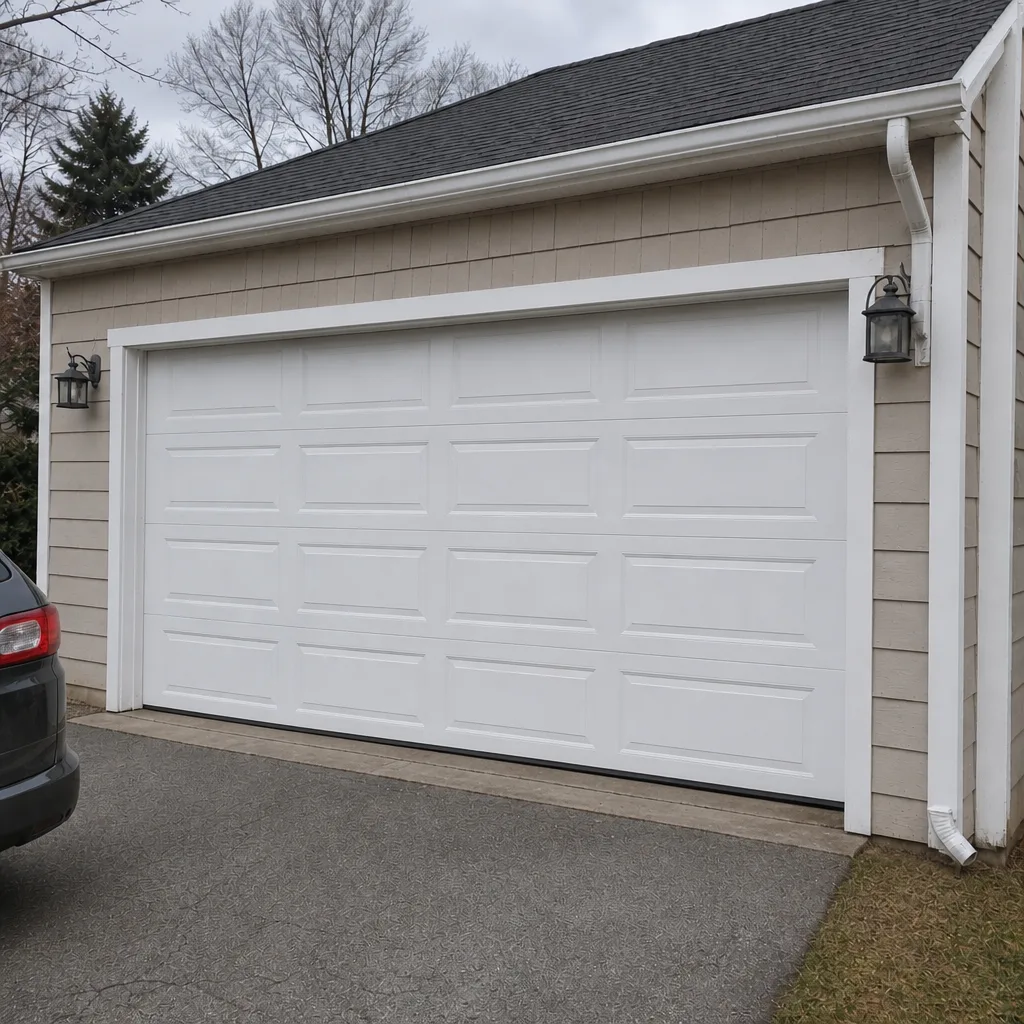 After
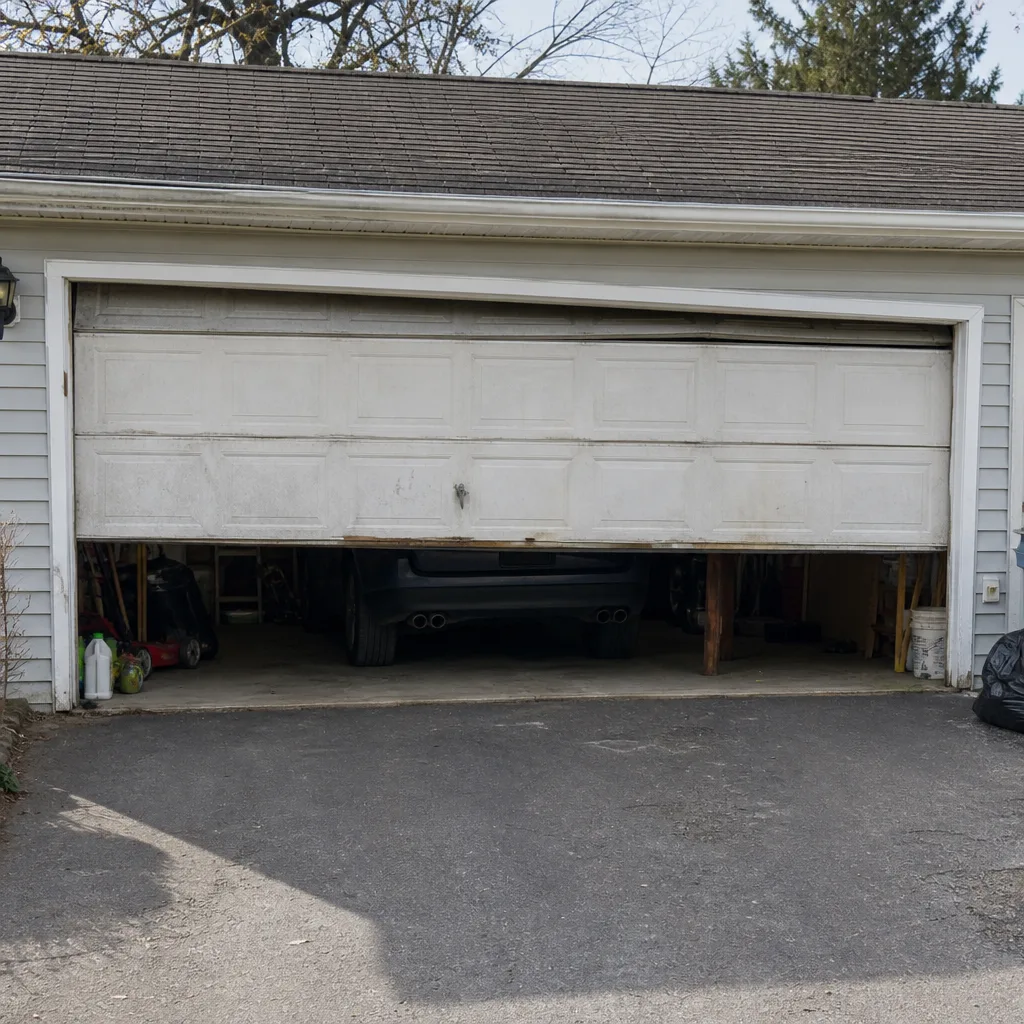 Before
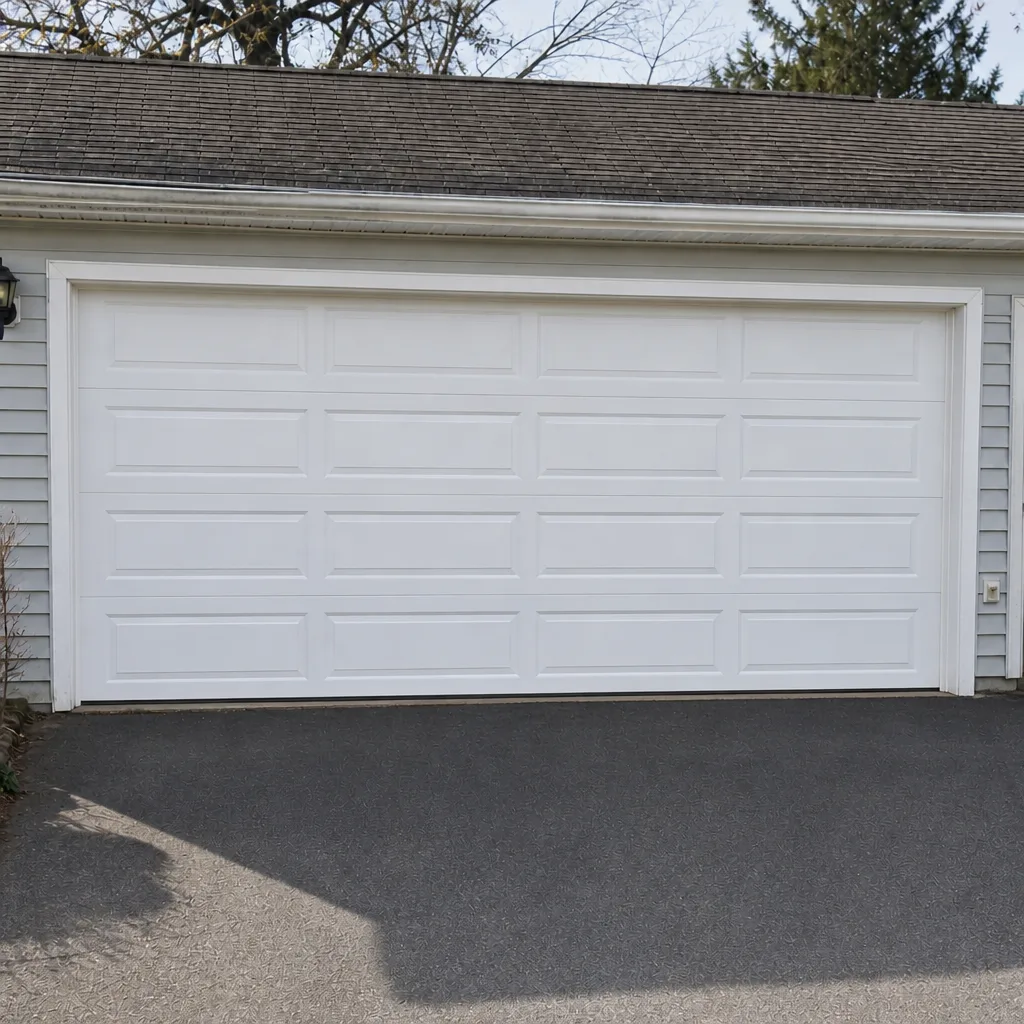 After
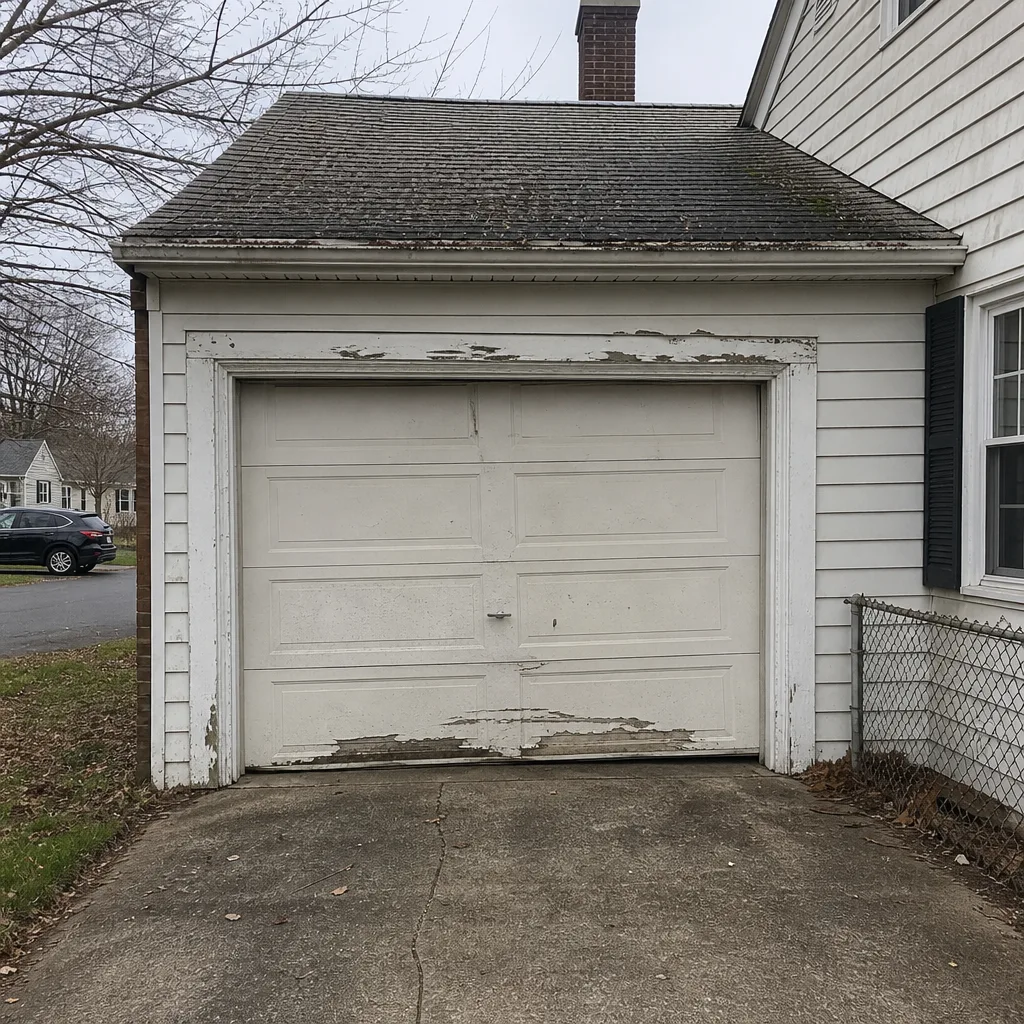 Before
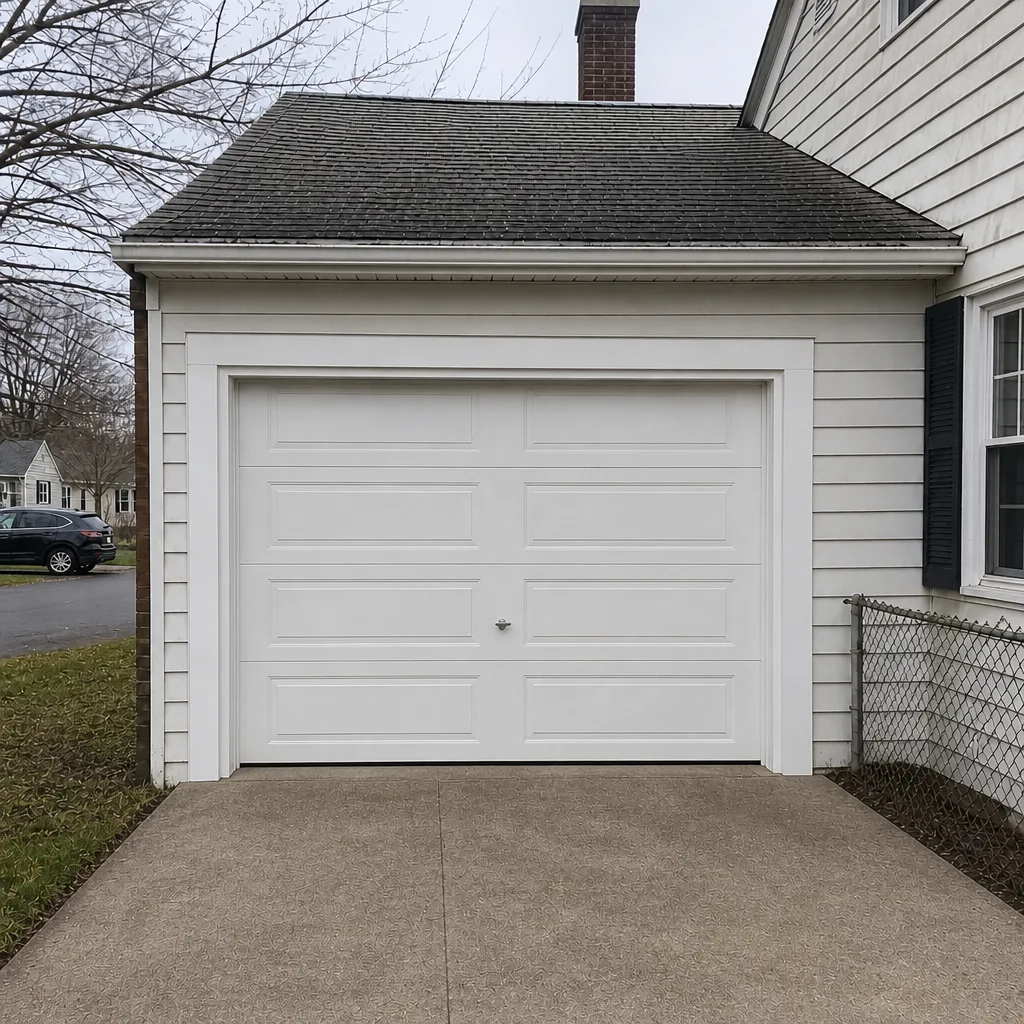 After
When to Call a Professional
Call a professional when the warning sign is one you can’t safely diagnose or fix yourself. A frayed or miswrapped cable, a broken or visibly worn spring, a door that hangs crooked, a door that reverses mid-cycle, or a failed safety reverse test all belong with a trained technician. Torsion springs and cables are the highest-risk parts of the system and shouldn’t be touched by anyone without the right tools and training. If you’re seeing two or more minor symptoms at once, that’s also a call, because the compounding effect makes it worse than the count suggests. Wakefield Garage Door Repair Pros offers free estimates in Wakefield – call (844) 459-6133. We handle garage door repair, opener repair, spring repair, and emergency service across Wakefield, so one call covers the whole system.
Frequently Asked Questions
The most common sign we see is a door that has gotten noticeably slower on the open cycle without an obvious cause. Homeowners usually assume the opener is tired; in most cases it’s the spring. Time the door on a full cycle, compare to your last timing, and call if it’s changed by two seconds or more. Call (844) 459-6133 for an exact diagnosis – estimates are free.
Spring repair in Wakefield is typically quoted per spring, because a matched pair is usually replaced together and costs roughly twice the single-spring range. A written estimate sets the final price. If your door is slow or fails the balance test, that’s the moment to get a quote – call (844) 459-6133 and we’ll set up a free estimate.
No. A gap or fray in the cable wrap is a same-week repair, not a next-month one. The right move is to leave the door in the closed position and call for service. Cables are under high tension and should be inspected by a trained technician. Call (844) 459-6133 to schedule an inspection.
Two tests tell you: timing the open cycle and running the balance test. A door that’s slower than it used to be, or sinks when you let go of it halfway, has springs that are wearing out. Get a repair scheduled before the snap. Call (844) 459-6133 and we’ll take a look.
Usually not. A slow door is more often a spring, roller, or balance problem than an opener problem. Diagnosing the door first saves you money. Wakefield Garage Door Repair Pros works on all major opener and door brands, so if the opener is the problem we can fix it, and if it isn’t we’ll tell you. Call (844) 459-6133 for a free estimate.
Yes, and sooner rather than later. Two minor symptoms are often much closer to a hard failure than one, because each part is wearing the parts around it faster. A repair started this week is usually smaller than one started after a breakage. Call (844) 459-6133 for an assessment.
The Bottom Line
Garage doors tell you they’re failing long before they fail. The signals are in sound (grinding, popping, squealing, rattling), in movement (speed and balance), and in visual clues (cable wrap, rollers, track, panels). The skill is distinguishing which ones allow normal use while you schedule service and which ones mean stop now. Signs compound, so two minor symptoms are often much closer to a real failure than the count suggests. Wakefield’s freeze-thaw winters make all of this more urgent, so time the door in fall and again in winter. Or skip the guesswork and have us look. Our technicians have up to 11 years of experience, and the Wakefield Garage Door Repair Pros team covers springs, openers, panels, and full installations under one company, so one call covers it. Call (844) 459-6133 for a free estimate.
Written by the team at Wakefield Garage Door Repair Pros.